Curriculum

Eight modules. One complete official.

FIBA 2026 rules-based, NOCP-informed. All content is validated by qualified instructors before certification use.

Module 1 · 3 hours

Role, Responsibilities & Ethics of an Official

Ethics, safety, professionalism and pre-game readiness

  • Professional conductImpartial decisions, respectful communication, confidentiality and consistency.
  • Before tip-offArrive early, inspect the court, verify equipment, check roster and coordinate with the table.
  • During the gameUse clear signals, active movement, preventive communication and appropriate intervention.
  • After the gameConfirm scoresheet completion, document incidents factually and review performance.
  • Safety & emergenciesInjuries, the blood rule and the venue's emergency plan.
  • Ethics & conflicts of interestImpartiality, gifts, confidentiality and social media.
  • Safe sport & youthRule of Two, safeguarding minors and reporting abuse or discrimination.
  • Mental preparationPre-game mindset, next-play focus and handling criticism.
Module 2 · 3 hours

FIBA Rules & Administration

Clock, score, possession, substitutions and restart procedures

  • Game structureFour 10-minute quarters, overtime and playing intervals; check competition modifications.
  • Live and dead ballRecognize the triggers that start and stop the game and shot clocks.
  • Substitutions and time-outsIdentify request windows and coordinate with table officials.
  • Jump ball & alternating possessionOpening jump, held balls and the possession arrow.
  • Scoring & shot clock24- and 14-second resets, clock stoppages and scoring signals.
  • Throw-ins & restartsThrow-in spots, the 5-second count and the late-game frontcourt option.

Module 3 · 3 hours

Violations, Ball Control & Hand Signals

Legal-versus-illegal movement and timing judgments

  • FootworkDetermine ball control, pivot foot, gather and permitted steps.
  • DribbleIdentify the beginning and ending of a dribble and illegal restart.
  • Court statusRecognize out-of-bounds, backcourt and return-to-frontcourt situations.
  • Time violations3, 5, 8 and 24-second rules with visible counts.
  • Goaltending & interferenceShots on the way down, the ring and the right result.
  • Signal sequence drillsStop, signal, direction — practise until it's automatic.

Module 4 · 3 hours

Fouls, Contact & Penalties

Legal guarding, cylinder principle and 2026 foul classifications

  • Contact principlesEvaluate legal position, responsibility, displacement and advantage.
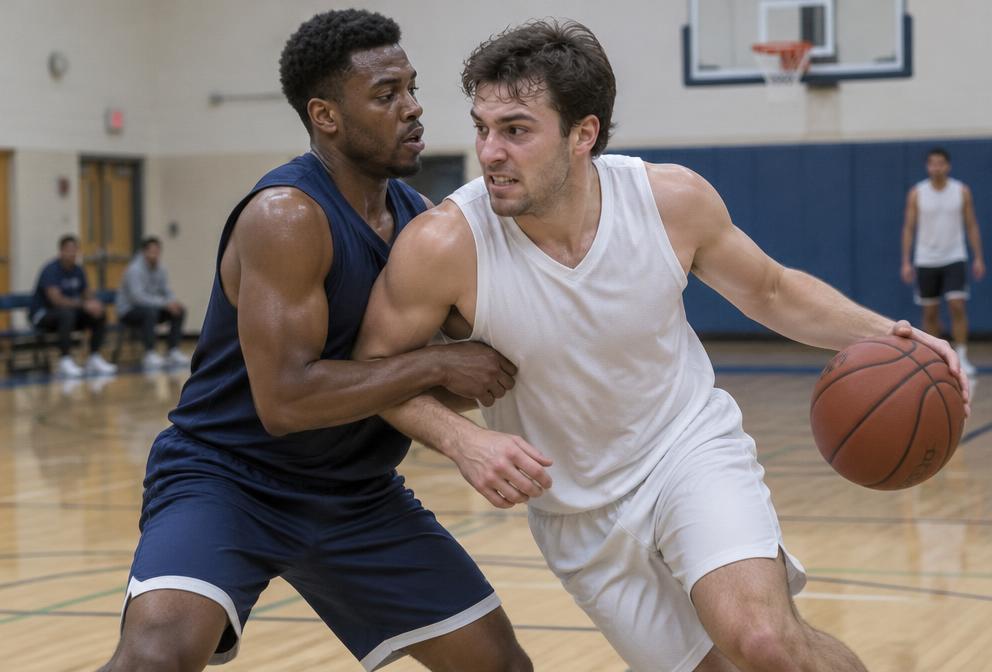
  • Personal foulsIdentify holding, pushing, blocking, charging and illegal screening.
  • 2026 changesTeach disruptive and flagrant foul categories instead of legacy unsportsmanlike classification.
  • Shooting fouls & free throwsAct of shooting, free-throw count and lane line-ups.
  • Screens & post playLegal screens, displacement and off-ball contact.
  • Technical, double & team foulsPenalties, the team-foul penalty and disqualification.

Module 5 · 4 hours

Mechanics, Court Positioning & Movement

Positioning, angles, coverage, transitions and rotations

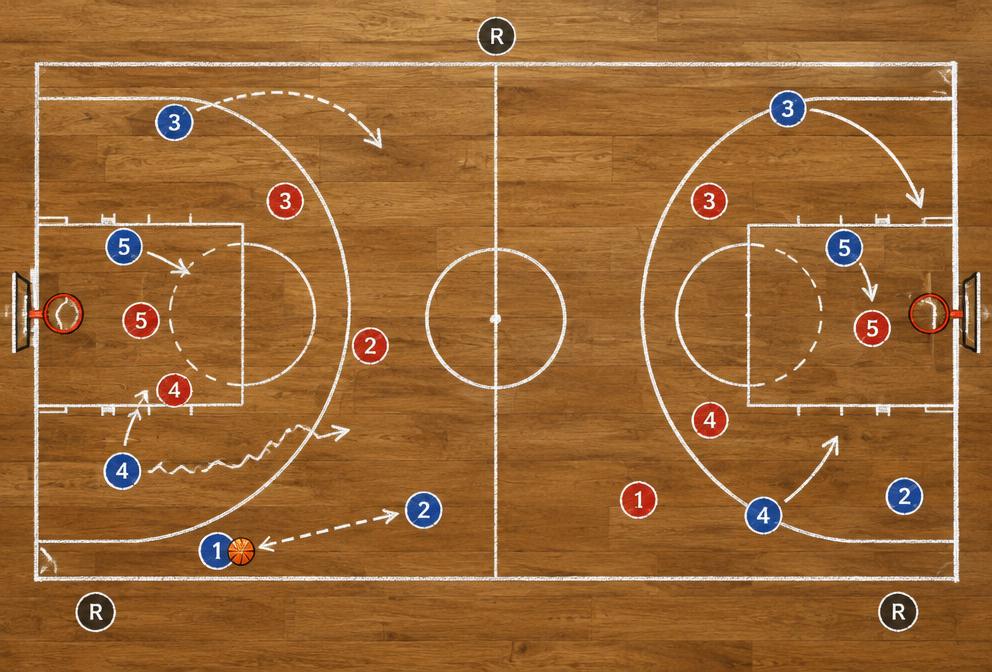
  • Two-person systemLead and Trail: primary coverage, movement and switching responsibilities.
  • Three-person systemLead, Centre and Trail: angles, coverage, rotations and help principles.
  • Off-ball observationFind open angles between bodies; avoid watching only the ball.
  • Transition & fast breaksSwapping Lead and Trail and staying ahead of the play.
  • Free throw & throw-in positionsEach official's job during dead-ball restarts.
  • End-of-period situationsLast-second shots, the 0.3-second rule and buzzer procedure.

Module 6 · 3 hours

Game Control & Communication

Conflict prevention, professional dialogue and bench management

  • PresenceUse calm, confident signals and consistent standards.
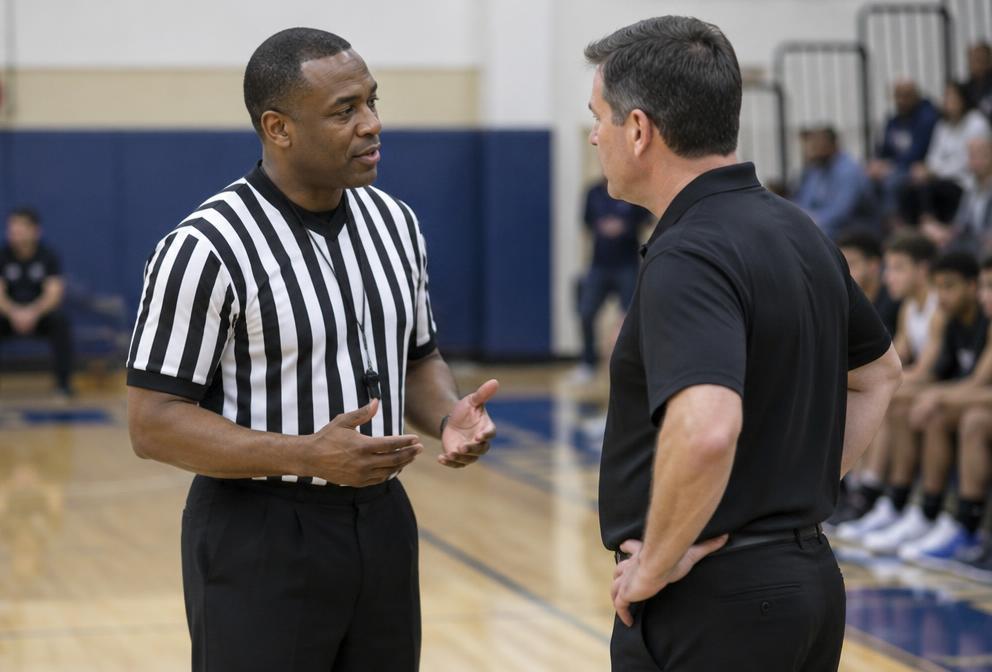
  • CommunicationExplain decisions briefly without debating every call.
  • Bench managementAddress repeated dissent or conduct according to current FIBA criteria.
  • De-escalationSpot conflict early, calm words and separating players safely.
  • Fighting & leaving the benchFight procedure, bench rule and reporting.
  • Crew teamworkSupporting partners, crew signals and private disagreement.

Module 7 · 3 hours

Video Review & Decision-Making

Clip analysis, decision cues and evidence-based feedback

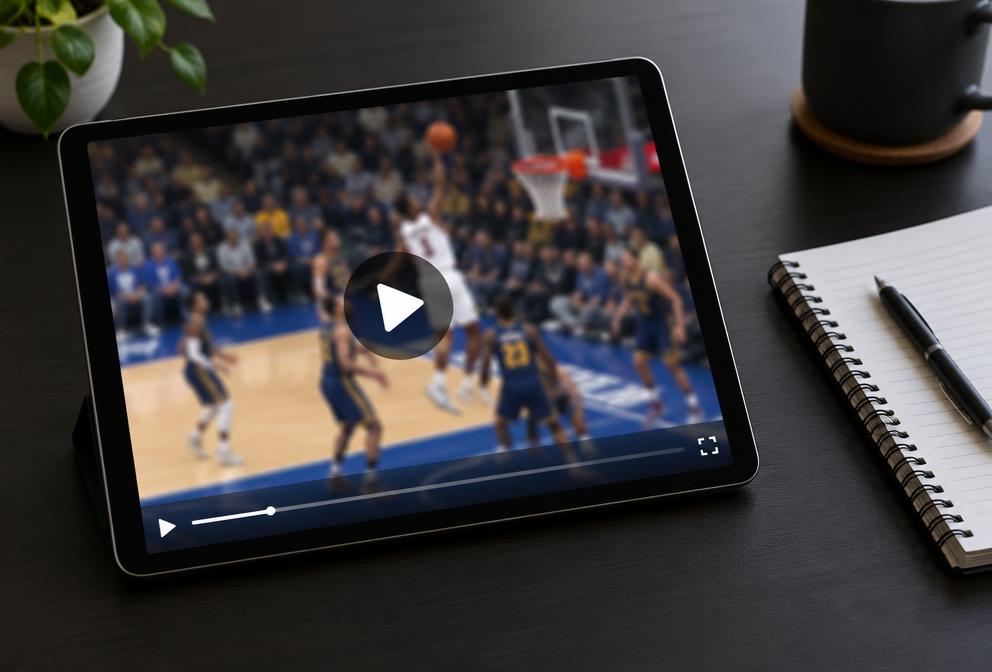
  • Video protocolWatch once in real time, identify the call, then replay to isolate key facts.
  • Footwork analysisMark control, gather, pivot, release and foot contact.
  • Contact analysisEvaluate initial position, contact point, responsibility and consequence.
  • Advantage & disadvantageWhen contact matters and when it's incidental.
  • Self-reviewA structured template for reviewing your own games.
  • Common judgment errorsBlock/charge, verticality and not guessing.

Module 8 · 2 hours

GamePro Live Standards, Fitness & Final Assessment

Platform workflow, evaluations, continuing education and advancement

  • Assignment readinessComplete required education and practical evaluations before independent assignments.
  • Check-inFollow the league-specific arrival and check-in policy; distinguish platform policy from FIBA rules.
  • Incident reportsRecord date, time, participants, observed facts and actions without speculation.
  • Fitness & readinessConditioning, warm-up, movement, agility, recovery and injury prevention for officials.
  • Platform workflowAvailability, accepting assignments and managing changes.
  • Evaluations & mentoringUsing feedback and working with a mentor.
  • Advancement & continuing educationAcademy levels, renewing credentials and lifelong learning.